Health
Structured health data for a private clinic
3 min read

You've measured this patient's blood pressure a dozen times over the years. You've recorded their weight at almost every visit. Somewhere in your notes is the trend, but to see it, you'd have to open every past consultation and read them in order.
Ιt isn't a discipline problem. It's a data problem. Almost everything a clinic records is written down once and then effectively lost; readable in theory, unusable in practice. "Structured health data" is just the name for fixing that. It sounds technical, and it sounds like more admin. It's the opposite: it's what finally lets you hand your patients something the clinic down the road can't.
Where your clinical data gets lost
Unstructured data is that same information left as it was written or received: free-text notes, scanned PDFs, letters, and images. A person can read it. A system can't do much with it, and even a person has to read the whole thing to find one number.
Structured health data is clinical information broken into consistent, labelled fields; A value, its date, its units, and the patient it belongs to, so it can be searched, compared, and tracked over time.
Once information is in a structured format, the things that used to vanish become things you can see. The dozen blood pressure readings become a line on a chart. The lab PDFs from three different providers line up on one trend. The finding buried in a scan report becomes searchable text you can surface in seconds. It isn't a different kind of information, and it isn't an AI making clinical decisions, it's what you already have, organised so that you, and your patient, can use it.
Here is the part that matters most in a clinical setting, and the part most "AI for healthcare" talk gets wrong. It's easy to point an AI at a PDF and have it read out a number. The problem is that it might read it wrong, and a wrong value doesn't look wrong, it looks like clean data. If you rely on a model to pull the figure fresh every time you need it, you're exposed to that risk on every single lookup.
Three kinds of information disappear in almost every clinic, every day.
Consultation entries are the first. A blood pressure, a weight, a note on how someone's sleeping, recorded faithfully, then buried in the body of a visit note in your EHR where you'll never realistically dig it back out. Each data point is captured. None of it accumulates into anything you can actually look at.
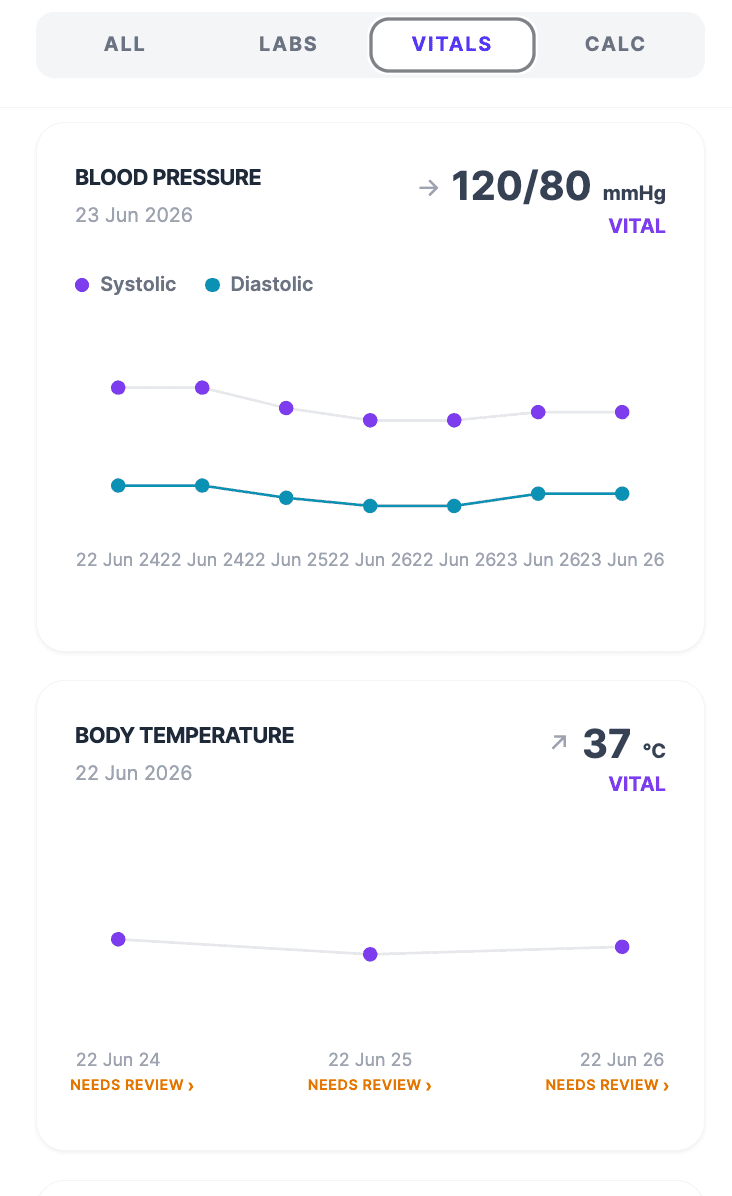
Vitals from consultation notes visualised on Nudge Care
Lab results are the second. Blood and urine come back from different labs, each as its own PDF, in its own layout, with its own reference ranges. You can open any one of them. What you can't do is open them together, see this year's panel next to last year's from a different provider, as one continuous picture rather than a folder of separate documents.
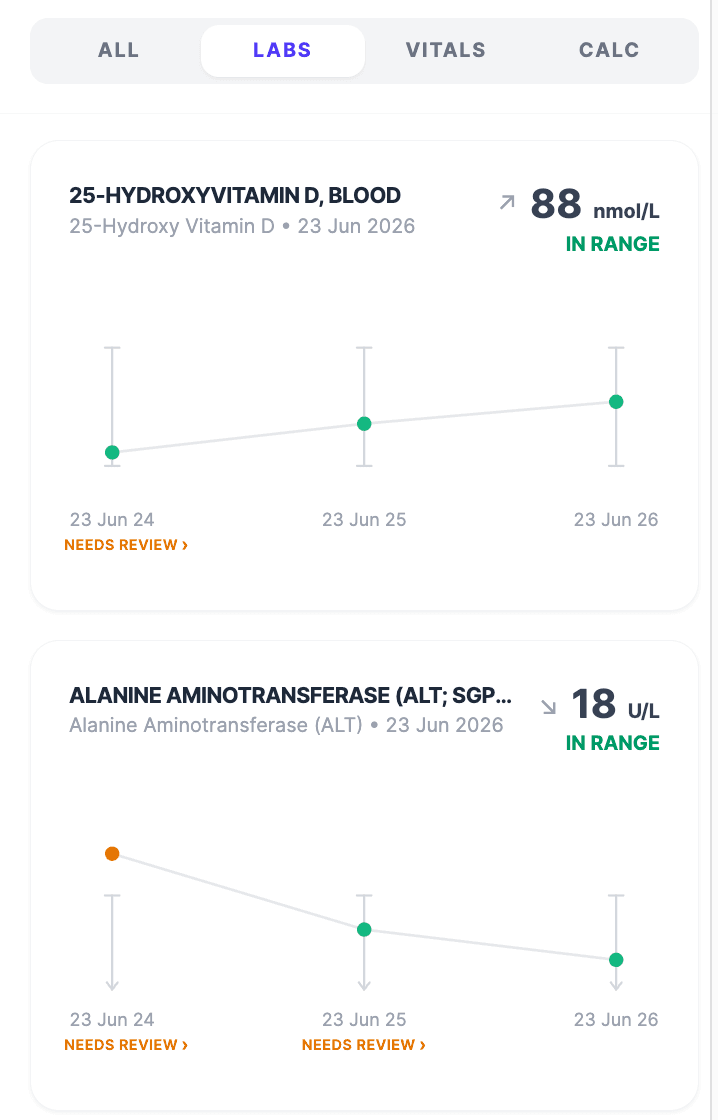
Blood results from different PDFs merged on Nudge Care
Diagnostic documents are the third. The scan report, the specialist letter, the discharge summary, referenced in a note, but locked behind it. To actually read the finding, you go hunting through attachments. The information is in the building. It just isn't anywhere you can reach in the ninety seconds you have before the patient is in front of you.
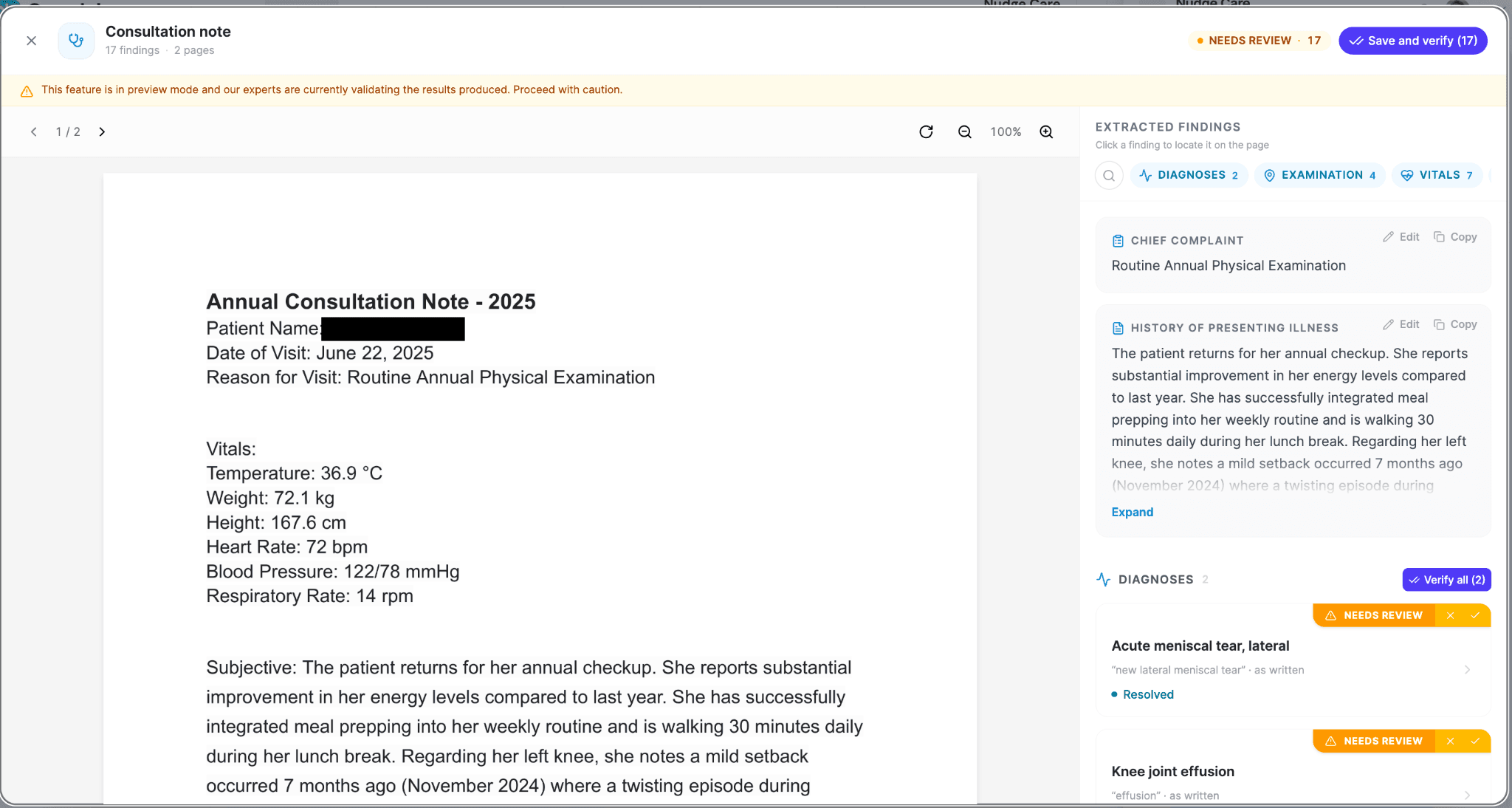
Information extraction from Clinical Notes on Nudge Care
None of this is exotic. It's the ordinary texture of clinical record-keeping, and it quietly costs you the one thing records are meant to give you: the ability to see a patient over time.
Learn more about Nudge Care
It's how you compete now, not just how you tidy up
A few years ago you could treat this as a back-office detail, in the same box as your booking system and getting your billing and tax right. It has quietly become more than that. Structured, verified data is now the line between a clinic patients move through and one they stay with, the foundation under a better experience, a stickier relationship, and a brand that looks a step ahead. It also future-proofs you: every AI tool you take on next inherits clean, trusted data instead of the same mess. Not a nice-to-have. The way a modern practice is run, and the way it wins.
That's the layer we're building at Nudge Care.
Want to see what your clinic's data looks like once it's structured? Book a demo.